
Duty Free Tobacco Shopping Guide
Cheap Cigarettes Online
Your research tool and catalog aggregator for discount cigarettes and cigars from licensed duty-free suppliers across the EU, UK, USA, and beyond. Free shipping available from listed retailers.
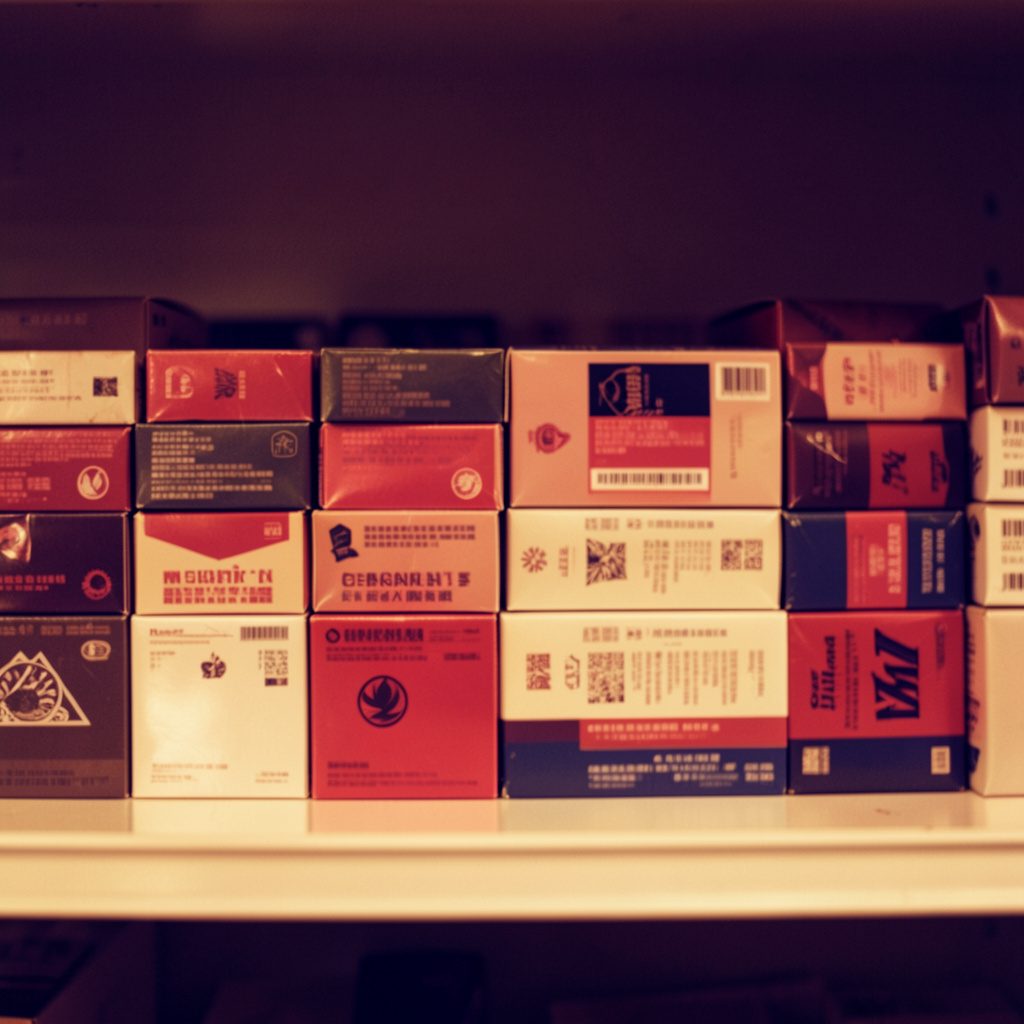
Your Online Tobacco Shopping Guide
Cheap Cigarettes Here is an online collection of links to tobacco stores — a research tool and shopping guide for discount cigarettes and cigars. We do not sell, stock, or ship tobacco products. Instead, we connect you with licensed duty-free suppliers from the UK, USA, Europe, France, Greece, and other regions.
Our catalog features dozens of major cigarette brands alongside affordable lesser-known options. Every listed retailer is presented as truthful, time-proven, and certified. Buyers are responsible for checking customs laws in their country before ordering.
Explore the Catalog →Reading a customs declaration on a tobacco package
A customs declaration is the short form that travels with a parcel as it crosses a border, whether it is a green postal label stuck to a box or an electronic record lodged by the courier. On tobacco, that form is where an ordinary purchase can turn into a physical inspection, a demand for duty, or a seizure of the contents. Reading a customs declaration on a tobacco package takes two minutes once you know which fields carry the weight.
In Australia, tobacco is an excisable good, and the Australian Taxation Office collects excise on cigarettes, cigars and rolling tobacco before the goods ever reach a shop shelf. Australian Border Force decides what enters the country and who pays for it, and tobacco sits near the top of the priority list for illicit trade enforcement. Seizures of undeclared cigarettes at Australian ports and courier hubs are routine enough that the paperwork attached to a parcel receives close attention.
For shoppers in Sydney, Melbourne, Brisbane, Perth and Adelaide, the practical point is simpler. Accurate paperwork means fewer questions, faster clearance and no surprise account at the door. Note also that tobacco posted through ordinary mail or courier channels is generally prohibited, so most declarations you will see belong to accompanied baggage, third-party forwarded parcels or commercial consignments arranged by overseas sellers.
What the declaration form actually contains
Postal parcels of this kind usually carry a CN22 form, while larger consignments use a CN23 or an electronic lodgement that produces the same data on screen. The fields worth reading are the description of the goods, the commodity code, the number of packages, the gross weight, the invoice reference, the declared value with its currency, and the country of origin.
The commodity code is where most errors happen. Cigarettes fall under heading 2402, with 2402.10 used for cigarettes and 2402.20 for cigars, cheroots and cigarillos. Rolling tobacco is classified as 2403.10 because it is tobacco intended for the manufacture of other tobacco products. Australian Border Force does not expect an ordinary buyer to act as a licensed classifier, but a code that plainly contradicts the description creates an avoidable question.
Gross weight is the field most people skip. A standard carton of ten packs of 20 cigarettes weighs roughly two to two and a half kilograms including the carton, and cigars and loose rolling tobacco weigh considerably more for the same declared quantity. If the weight on the form does not match what a parcel of that size should weigh, the parcel is flagged before anyone opens it.
Why small discrepancies trigger suspicion
The classic trigger is a declared value that has no relationship to the real sale price. A full carton written up as a gift, as personal effects, as samples, or valued at one dollar, tells a risk analyst that the invoice inside the box is worth reading. Under-declaring value is not a shortcut; it is a false declaration, and tobacco parcels are among the most heavily inspected categories in the network.
Other warning signs cluster together. A vague description that hides the word cigarette, a handwritten correction over a printed figure, a missing invoice number, a country of origin that contradicts the brand on the pack, or a quantity of sticks far beyond what the weight can support. The commercial invoice and packing slip inside the parcel are compared against the external form, and any mismatch between the two documents is treated as evidence rather than as an administrative slip.
Physical checks make this riskier for tobacco than for many other goods. X-ray and scent screening identify dense, uniformly shaped cigarette cartons easily, and the excise value on a large shipment is high enough to justify the operational cost of opening the box.
Matching the paperwork to the contents
Start with the invoice, because it is the reference point for everything else. Divide the invoice total by the number of packs and compare that figure with the declared value on the form. If the form says two hundred dollars for a carton that the invoice shows at one hundred and forty, and the invoice states the currency as US dollars rather than euros, then either the conversion or the figures are wrong.
Rolling tobacco needs particular care. Excise on cigarettes is calculated per quantity of sticks, while rolling tobacco is taxed per kilogram, which means a modest-looking parcel of loose tobacco can attract more duty than its declared value would ever cover. Keeping the weight and the invoice together makes that difference explainable rather than alarming.
The country of origin should also agree with what is printed on the carton. A European brand shipped from a United States warehouse may legitimately be described by its country of manufacture, but a form that names the wrong origin invites the officer to assume the pack labels have been altered to defeat tax stamps or local market restrictions.
Comparing consistent paperwork with warning signs
A side-by-side view of the fields border officers check:
| Declaration field | What a consistent entry looks like | What triggers a check |
|---|---|---|
| Description of goods | Cigarettes, 10 packs of 20, or cigars, or rolling tobacco | Personal effects, gift, samples, or a description that hides tobacco |
| Commodity code | 2402.10 for cigarettes, 2402.20 for cigars, 2403.10 for rolling tobacco | Blank, 9999, or a code belonging to another product |
| Number of packages | Matches the carton count visible in the parcel | More packs declared than the box can hold, or fewer than the weight implies |
| Declared value | The actual sale price in the invoice currency, converted to Australian dollars | A token figure such as $1 for a full carton |
| Gross weight | About 2 to 2.5 kg for a carton of ten cigarette packs, higher for cigars or loose tobacco | A weight consistent with cigarettes but not with the product inside |
| Country of origin | The manufacturing country printed on the packs and the carton | Contradicts the Made in marking on the product |
| Invoice reference | A number that matches the invoice enclosed in the parcel | Missing, altered or overwritten by hand |
A form that reads consistently across every row is unremarkable, and that is the goal. Nothing on this list requires special knowledge to get right; it requires the seller to copy real details from a real invoice onto the form instead of approximating them.
Personal use, gifts and forwarded consignments
Personal allowances for tobacco arriving in accompanied baggage have been wound back in recent years, so quantities that once passed unremarked at the border can now prompt a question. The current limits are published by Australian Border Force, and anyone travelling with more than a personal-use quantity should check them before packing a carton into checked luggage.
Gifts follow the same principle. If a friend posts or carries a carton for you, the form should state that it is a gift and show its true value, because the recipient still answers for the goods. A gift declared at zero value reads as an attempt to avoid duty rather than as generosity.
Forwarded parcels sit in a grey area that Australian Border Force treats seriously. Retailers who ship directly from overseas warehouses, or who sell on consignment so that you pay per order, can be assessed as importing for sale rather than for personal use, and commercial import requires licences held by the seller and records kept in the Federal Register of Tobacco and Nicotine Products. State licensing in New South Wales, Victoria and Queensland adds a second layer for anyone intending to resell rather than to smoke.
Excise, GST and the cost of a wrong declaration
Tobacco entering Australia attracts the tobacco excise, set per stick for cigarettes and per kilogram for rolling tobacco, plus GST on the duty-paid value. An under-declared carton therefore leaves duty unpaid at the border and creates a second problem: the false declaration itself. Australian illicit tobacco penalties reach multiples of the duty evaded, and a false or misleading statement to Border Force can carry criminal penalties under the Customs Act 1901.
Keep the evidence. Screenshots of the product listing, the invoice, the payment confirmation, the courier tracking history and the declaration form should be stored somewhere you can reach them later, and kept for at least five years. Customs and excise rules shift, and the industry news updates published on this site are a practical place to watch for changes that affect how tobacco parcels are assessed and taxed.
Ordering with paperwork you can verify
Check the retailer pages before you pay. Any seller who ships to Australia should be able to confirm the country of origin, the commodity code, the gross weight and the true value of a carton, and a seller who cannot answer those questions has not read a customs declaration on a tobacco package any more closely than you have. Look for listings that state shipping terms to Australian cities, that name the courier and the delivery time, and that include a legible invoice you can compare against the parcel label when it arrives.
Before ordering, read the Australian Border Force guidance on importing tobacco and check the current personal allowance, and keep in mind that ordinary mail and courier channels are closed to tobacco imports. Once a parcel is on its way, verify that the weight on the form matches what the courier scales recorded, and if the declared value looks wrong to you, raise it with the retailer rather than with the officer at the door. Accurate declarations protect the parcel, the seller and the buyer at the same time.
Request Info
Looking for a specific brand or have questions about duty-free purchasing? Reach out and we'll point you in the right direction.
Featured Brands in Our Catalog
-
✓
Camel
Introduced by R.J. Reynolds Tobacco in summer 1913. Blended with Turkish and Virginia tobacco for a milder taste. Available as duty-free non-filtered and light varieties.
-
✓
Gauloises
Produced in France in king size (85 mm) or long (100 mm). Relaunched in 1984 as Gauloises Blondes with an American-type blend. Known for strong, pleasant taste.
-
✓
State Express 555
King Size Classic cigarettes made in the EU. Offered at discounted prices by wholesale distributors.
-
✓
Craven A
Virginia KS cigarettes made in the UK. Available through online wholesale cigarette stores.
Why Use This Guide
We collect and organize links to licensed duty-free tobacco suppliers so you can compare options across multiple regions — all in one place. Our catalog spans dozens of brands, from premium names like Davidoff and Dunhill to budget-friendly EU-made options.
Every retailer listed has been reviewed for reliability. We also publish regular tobacco industry news covering tax changes, health studies, and product innovations to help you stay informed.
Important: Buyers are responsible for verifying that importing tobacco products is legal in their country. Laws vary by jurisdiction.
Read the FAQ →
Customer Testimonials
"This site saved me hours of searching. I found exactly the brands I was looking for from a reliable EU supplier. The catalog is comprehensive and easy to navigate."
— Michael T.
"I was skeptical at first, but the links led me to a legitimate duty-free store with great prices on Camel and Winston. Free shipping was a bonus. Highly recommend this guide."
— Sarah K.
Frequently Asked Questions
Does this site sell cigarettes?
No. Cheap Cigarettes Here does not sell, stock, or ship tobacco products. We are an online collection of links to tobacco stores — a research tool and shopping guide that connects you with licensed duty-free suppliers.
Is it legal to import cigarettes?
Laws vary by country. Buyers are responsible for checking customs laws in their country before placing any order. Do not order items that are illegal to import into your jurisdiction.
Where do the products come from?
Products are sourced from licensed duty-free suppliers in the UK, USA, Europe, France, Greece, and other regions. Each retailer is presented as truthful, time-proven, and certified.
Do you provide customer support?
No. We do not provide customer support for purchases. Any issues with orders, shipping, or products must be resolved directly with the retailer you choose to purchase from.